In Romeo and Juliet, my least favorite character would have to be Juliet's cousin Tybalt. All the way through act 3 scene 1 when he dies, the only thing Tybalt does is express his unexplained hatred of the Montague family. It seems all Tybalt has done for anyone is incite conflict. He seems to be the only family member of the Capulets who dislike the Montagues. Even his death caused more hatred-- the rest of the Capulets against the Montegues. Tybalt had thought that all the fighting he provoke was justified, which I found really interesting. Because it clearly wasn't, it suggested that Tybalt was still childish and not fully mature.
In the opening of the play-- the fight scene-- the audience is exposed to the spitefulness of Tybalt.
In 1.1.71~73 Tybalt responds to Benvolio's offer to keep peace. " What, drawn and talk of peace? I hate the word/ As I hate hell, all Montagues, and thee./ Have at thee coward!" Right away Juliet's cousin is portrayed as a cold-hearted character, claiming that he hates peace and the Montagues as much as he hates hell. Throughout all of the play that Tybalt takes part in, he never states why he has such disgust for the other family. So this makes me think that he picked fights out of jealousy or envy. And as an adult and respectable figure, I would imagine he would have other ways to cope with his feelings. But he reminds me of the stereotypical bully in the play yard, looking for another kid to punch. His fights seem very attention-oriented because there is no reason to have one. So he is full of jealousy, envy, and wants attention, just to name a few of his child-like characteristics.
At the party scene, when Romeo and Mercutio crash the celebration, it seems as though Tybalt is personally offended. "Now, by the stock and honor of my kin,/ To strike him dead I hold it not a sin." 1.5.66~67. Then Capulet replies, "Let him alone./ He bears him like a portly gentleman,/ And, to say truth, Verona brags of him," 1.5.74~76. Even with his Uncle telling him to calm down, he is reluctant. He says, "by the stock and honor of my kin," claiming that he would kill Romeo and it would not be a crime because it is for the honor of his family. But, Capulet doesn't seem to mind. It seems as though Tybalt is ignorant and is oblivious to the fact that he is the only one with such hatred. 1.5.102~103, Tybalt states, "I will withdraw, but this intrusion shall,/ Now seeming sweet, convert to a bitt'rest gall." This line built great annoyance in me when I read it. It doesn't have to turn into something bitter if Tybalt would just let it go! Why is it impossible for Tybalt to be the bigger person, and prevent an issue before it occurs?
Lastly, at his final fighting scene, he tries to invite Romeo to a duel. He declines, because he is already secretly married to Juliet, and states that he loves Tybalt more than he can understand. "Boy, this shall not excuse the injuries/ That thou hast done me. Therefore turn and draw." 3.1.67~68. Romeo responds " I do protest I never injured thee/ But love thee better than thou canst devise/ Till thou shalt know the reason of my love./ And so, good Capulet, which name I tender/ As dearly as mine own, be satisfied." 3.1.69~73. Here Romeo is saying that no, he hasn't done Tybalt any wrong, and he loves him and the Capulet name like his own. He wants Tybalt to be satisfied with his statements, and stop pressing him to fight. Yet, Tybalt doesn't stop. He kills Mercutio, and then after some more instigating-- he himself is killed. Tybalt needs self-control, and to think before he speaks. It was his words and actions that landed him dead.
Overall, I felt like Tybalt was not mature enough to face the truth and to let go of his random hatred. He tricked himself into thinking that he and he only knew what was right. Truthfully, without him, I don't think the story of Romeo and Juliet would be a tragedy. At most, Juliet had to marry Paris. Tybalt could not even present himself maturely. Instead he showed his ignorance, jealousy and desire for attention. But what do you guys think is responsible for Tybalt's actions?
Friday, March 15, 2013

Thursday, March 7, 2013
What is love?
In the dictionary, love is defined as a feeling of strong affection and passion towards something or someone. But is it something more? Can it even be defined?
William Shakespeare portrays so many views of love through his characters in Romeo and Juliet, and they all in some aspects, are true. Some of the characters describe love as painful and gruesome, and others a light and airy feeling. The characters who's explanations stood out the most to me though, were Capulet's and Romeo's.
Capulet's point of view on love seems to alter throughout the story, but in the beginning he seems sincere. In act 1 scene 2, he and Paris discuss the marriage of Juliet. "My child is yet a stranger in the world. /She hath not seen the change of fourteen years. /Let two more summers wither in their pride /Ere we may think her ripe to be a bride." Although Capulet is still agreeing to the marriage proposal for Juliet, he seems to be considerate of the time she needs to grow and learn. When he says that his daughter is a stranger to the world and asks for two more years, he knows that Juliet will not enjoy marriage at this age. He seems to understand that her love for him will not come so soon. Because marrying in your teenage years was common during the time period this takes place in, I think that it is fair and even quite generous of the father. If Juliet has not discovered herself and the world around her, how is she to love and marry a man her parents found suiting for her?
Romeo seems quite desperate for love during his recovery of heartbreak. He describes it as a: "Feather of lead, bright smoke, cold fire, sick health, / Still-waking sleep that is not what it is! /This love feel I, that feel no love in this." Obviously in stress, Romeo experiences the pains and aches of love. He feels so much emotions towards Rosaline that it weighs him down. It gives him even more heaviness facing the fact that she can never return the same passion. Romeo's description, in my opinion, is relevant in every relationship. I don't think that a perfect way to love exists. There will always be difficulties. Times of doubt, confusion, or just longing. Love is not an ideal feeling but an overpowering emotion that can change who you are if you cannot understand it.
These are two very different views on love, yet I can understand them both very easily. Capulet's view suggests that time is needed for love, whereas we come to learn with Romeo that love makes an entrance in the most unexpected places and times. I guess that my view is that love can take years, or it can take minutes. Love is a matter of seeing the good in a person, not how good the person looks. Love is hard to be defined, especially because there are so many meanings. But what is love to you?
Wednesday, February 27, 2013
Second Chance
The article "Crime and Punishment" by Patricia Smith discusses the controversy of one of the Supreme Court's new ruling. Teens who have been sentenced life without parole due to homicide or other vile acts, will be tried once more. Many scientists and researchers seem to agree with this ruling, due to findings on the growth and development in the brain of a teenager. But many others think that it is a dangerous mistake. Kent Scheidegger, a worker for the Criminal Legal Justice Foundation, says "There are some truly horrible crimes committed by 17-year-olds, and those crimes deserve life without parole." But the other side of the debate says that the mistakes made by kids do not always reflect the personality they will hold as adults.
The author wants the reader to feel that the ruling is fair. Smith does this by filling the article with facts to back up the argument. For example, psychology professor Laurence Steinberg states the "Ninety percent of teen offenders do not become adult criminals," which is why not all teen cases should be tried as adult ones. Patricia says that the crime rate in teens have gone decreased because those who have committed crime are in jail. This suggests that most teenagers do not commit crime as a daily activity. Most time spent behind bars is a result of small mistakes in their childhood. The author uses an example of Rebecca Falcon, who has been sentenced life without parole.When she was 15, she and her friend who owned a gun, got drunk one night and one or the other shot a taxi cab driver. Although it was unclear the actual events, Falcon is now 30 and still in jail. She wishes and is hopeful that she will be tried again. Smith states that a person's actions at 13 or 14 are a poor sign of the kind of adult he or she will become.
Could the cruelness and hate be of the same level, if a 14 year old murders someone, or a 30 year old murders someone? My point of view on the topic overall is quite mixed. It is clear that adults have to be independent and make their own decisions. But in class, we were discussing that sometimes, children have to make their own decisions too. And in very few cases do the parents allow their child to kill or commit crime. Teenagers always complain that they should be treated as adults, but when in court they beg not to be. Does this mean they should? Yes, kids make the mistake of doing drugs and drinking, but adults can make mistakes also. Why should a murder be let go opposed to another murder?
Then again, I feel like a crime done by a child may most likely be an act done by impulse. Have teenagers fully matured enough to realize the repercussion of their actions? If many struggle to think before they speak, how can one manage to think before they act? I believe that the court's ruling is fair, because they aren't suddenly letting thousands of prisoners free. They are allowing them the privilege of a second chance, to think over their cases from more than one point of view. Why should one mishap rule ones life? All in all, I thought the article was extremely informative, but I can't quite place a firm opinion.
Bibliography:
- Smith, Patricia. "Crime and Punishment." New York Times Upfront 17 Sep. 2012: 8-11.
Tuesday, February 19, 2013
Ignorance Is Bliss
The Fault In Our Stars By John Green
"Mr. Martinez asked who among us had ever fantasized about living in the clouds, and everyone raised their hand. Then Mr. Martinez told us that up in the clouds the wind blew one hundred and fifty miles and hour and the temperature was thirty below zero and there was no oxygen and we'd all die within seconds... He specialized in the murder of dreams, Hazel Grace let me tell you. You think volcanoes are awesome? Tell that to the ten thousand screaming corpses at Pompeii. You still secretly believe that there is an element of magic to this world? It's all just soulless molecules bouncing against each other randomly. Do you worry about who will take care of you if your parents die? As well you should, because they will be worm food in the fullness of time." "Ignorance is bliss."
The protagonist of this book is Hazel Grace, a 16-year old girl currently living through cancer. Her dearest friend Augustus Waters is an amputee in remission. Way ahead of their years, they are both aware of the truth that is hidden beneath childhood hopes and beliefs. This particular rant given by Augustus Waters stuck out to me mainly because of Hazel's simple response.
In Augustus's little spiel, he recites with disgust his science teacher's explanations and probabilities of situations that all kids have dreamed about. Basically, his reasoning is straight forward, and with no sympathy he easily hits his students with hard facts. So when Hazel Grace says "Ignorance is bliss," she remembers the time of innocence, and being naive. Because she already knows that she will die of her illness, she wishes for a the feeling of not knowing what risks and dangers are. She wants the feeling of living carefree-- without the constant presence of death hanging right around the corner, ready to strike. So, in someways, being oblivious can be a privilege. There is a little less weight on your shoulders. There is hope for something good, in a situation where there is no clear answer.
When I was younger I used to believe in things likes Santa Claus, the Tooth Fairy, and I always wished for the moment when I would become an adult because it seemed oh-so-fun. But one Christmas I woke too early, to find my parents wrapping gifts. When I lost my tooth I woke to my mother's hand underneath my pillow, sneaking a dollar bill. I started to notice the pattern of my dreams being rudely awakened by reality. While I still have a lot to discover, I'm old enough to know that adults have to work many hours a week. They have to pay bills and do their taxes. Adults don't get allowance for doing the dishes or taking out the garbage. When your adult you figure out your life and you know what is ahead of you, where as when you are a kid you can dream and wish. It gives us a motive, to try and succeed. But if we are exposed to the likeliness of maybe becoming a celebrity or a millionaire, then what is there to look forward too? How much confidence or trust would you have if you were told that the beliefs you grew up with were too good to be true?
Wednesday, January 30, 2013
Same Love
The song Same Love by Macklemore and Mary Lambert, produced by Ryan Lewis, advertises their support of gay marriage. The message of this song is that no religion or belief justifies the mistreatment of the certain group of gay people. They should have human rights just as any other, because they love like any other.
"The right-wing conservatives think it's a decision, and you can be cured with some treatment and religion" Many religious people believe that one chooses to like another of the same sex, and fails to understand that that is the person they are. Many religions teach that being gay is a wrong doing, and it is a characteristic that can simply be taken away through treatment.
But being gay is not an illness.
"Live on and be your self, when I was at church they taught me something else. When the preach hate at service those words aren't anointed, and the holy water you soak in has been poisoned." Churches are strongly against gays as it, "goes against the bible," but by practicing this intolerance in church it preaches hate. It forces a predijuce on people who practice that faith. But when religions cannot accept all who wish to practice, then their services and holy water that bring one another together becomes of a lesser meaning.
"'Man that's gay' gets dropped on the daily, we've become so numb to what we are sayin'." Over the years the word gay has become a word of hate instead of what it truly is. It's a rude term yet society has turned it into an every day saying and thats why people who use it don't take into consideration its meaning.
When I first listened to this song a while ago, I was touched by the sincerity of his words. But at the same time I was hit with his powerful message. Our nation has achieved a lot of things, yet the one that is most important has not been fully accomplished. Human rights. While we are working on it, creating new laws and bills, I feel their will always be a hidden hate untill true acceptance is found.
This hatred is : "the same hatred that caused wars on religion... the same fight that led people to walk outs and sit ins." So why isn't it as important?
Tuesday, January 22, 2013
The Bravest of Them All
~ I have just finished the book, The Book Thief by Markus Zusak and I strongly recommend this book to everyone!!! It provoked so many strong emotions, and I felt so much empathy for each character. It was beautifully written. ~
"You coward." spat Hans Junior to his very own father, and stomped out to vanish onto Himmel Street. Hans Huberman? Papa? A coward? For not being apart of the Nazi Party? For being against Hitler? Not in my opinion. No one there on Himmel Street was a coward. Every neighbor's bond created a friendship so strong it could overcome any beast. It is Junior who is the coward.
Hans Huberman is one of the most inspiring characters to me. Because in a world that was then ruled by fear, he still managed to do what was right.
He was a painter. He was a father. He was a friend. So when Hitler came into power, he didn't have the heart to deny a Jew from his services of simply painting an insult off of his store's window. Strike one. He hid a Jew named Max into his family's basement. He cared for and shared what little his poor family had. Strike two. During a march of Jewish prisoners through the town on Munich, he gave an old man bread. He received a public whipping, and was the drafted to battle in Russia.
What am I trying to say? Well, it is those who joined forces with Hitler who are beneath us. The men who became Nazis although convinced themselves it was a good cause, were just hiding from the wrath of Adolf and his followers. It was people like Hans Huberman who against all risks did not fall under the brain washing of the tyrant who were courageous. It was them who were brave. Hiding a Jew during the Holocaust was life-threatening. It was not a small task. Those who did were standing up to a whole army of soldiers; once-innocent men who were blinded with hate.
So no, those German soldiers, back in 1930, they were not brave.
Max was, for staying some what sane during the time period.
Leisel and Rudy were, for befriending Max, and knowing right from wrong.
And Hans Huberman, who most definitely, was not a coward.
Tuesday, January 15, 2013
A Modern Form of Racism
Illegal immigration has been a leading factor of discussion in politics since the 1700's. Many see unfairness in illegal immigrants taking their jobs, and maybe even being in higher ranking occupations. In order to fix this problem, states like Arizona have passed laws that allow police officers to randomly search anyone of whom they assume could be an illegal immigrant. There is much controversy on this law, however, because many see it as a racist act.
During the industrialization period, immigrants where mainly of Irish or Chinese descent. Later in the 1900's it was the Italians. Now in the twenty-first century, the majority of immigrants are from Mexico. So, while currently there are a lot of immigrants from other places besides Mexico, Hispanics as a whole are being targeted. New laws expect everyone to carry around their citizenship papers in the possibility that he or she might be questioned. Everyone meaning if you happen to "look" like an immigrant.
Based on the author's questioning on whether or not the government's way solving the issue will improve, she is not for the new immigration laws. She states that even from the very beginning of construction of America, most Americans were immigrants. While describing the conflict in Arizona she quotes people who are on either side in the debate."It's a law based on racism. I know a lot of people who are afraid of going out in the street. They just take their children to school and go right home. They feel like their safety is threatened." -- Gamboa, a U.S citizen, son of illegal immigrants. Gaheen is someone who feels very strongly against any illegal immigrant. The author, Patricia Smith, chose two very opposing opinions to show the severity of the issue at its most.
I can understand both point of views, for instance, being angered that someone who is illegally living in the U.S. got the job you wanted--needed. At the same time though, there must be other ways to solve the problem of illegal immigration. I agree completely when Gamboa says it is a law based on racism because it discriminates against Hispanics. I think that instead of deporting people who may or may not be an illegal immigrant, the government should just create a more structured way in preventing more from entering. There is no real ethical way of removing the immigrants who are already in the U.S., seeing that everyone deserves a better life and new beginning. Because there are over 11 million illegal immigrants already in America, I don't see the benefits in making it harder for people like them to succeed. Overall, any law that is passed needs to be fair to all the races and nationalities that make our nation.
Bibliography:
- Smith, Patricia. "The Great Immigration Debate." Upfront New York Times Magazine 6 Sep. 2010. 13 Jan. 2013
Wednesday, December 19, 2012
I Like Blue
Luna by Julie Anne Peters
Blue is my mother's favorite color, in fact. Through research I actually found that most girls prefer blues and greens and purples. Is this supposed to mean something significant? No, it's not. We can like any color really, no matter what any stereotype is. The reality is that humans find color pretty or interesting, and our interests cannot be confined within basic categories based on gender. I am a girl and I like blue. A boy can like pink, or purple, or turquoise, and it shouldn't matter. Whoever made the stereotype that boys like blue and girls like pink, has made our society forever corrupt in that girls and boys will always be judged on whether they hold the characteristics that each gender should have.
In the book Luna by Julie Anne Peters, the father is noticeably sexist-- which is hard to deal with when your son is a transgender. He is really into the idea of the females doing the housework and the males doing the handiwork. When asked why the sky is blue, he said: "because God is a boy. If God was a girl, the sky would be pink. As a' little boy the son wanted a barbie, so to the father there was "something wrong with him."
Maybe the father really isn't selfish, and he was just looking forward to having those father and son moments. Does that make it OK to force Liam (the son) to do sports, or work out in the gym? Not at all. Unfortunately, parents have their flaws. But failing to accept your child for who they are has some of the worst effects.
My little cousin Max likes the color pink. He has a pink hat, and a pink night shirt. His sister likes to play around in the dirt, and do sports, and rock climb. To me and to their parents, it doesn't make a difference. They can like any color and it won't make a difference, because they are both happy children who will succeed whether or not they like pink or blue. I don't see why that isn't the priority, but forcing your child into being the standard boy or girl is.
Wednesday, December 12, 2012
What Would You Do For Love?
Tell No One by Harlan Coben
He turns his head slowly. That's when he sees the cop. He can't get arrested, only a few hours till he can see his wife for the first time in 8 years. So he runs. Through the park, the streets, and hides in a dumpster. The federal government on the search for what is truly an innocent man, driven by love to display himself as guilty.
Romeo and Juliet. They take poison for each other. Hunger Games. Katniss volunteers to take her sister's place in the death games. In books and movies, scenes like these are sometimes viewed as dramatic, at the same time inspiring and heartbreaking. Some people might role their eyes. But what they don't see, is that these things are actually realistic. People act out of love all the time, but how far would you go?
Most kids our age won't admit that they'd care about someone so much that they'd risk their life for them. But put in a situation where you might have to, a lot of people would do it in a second.
Humans were given the gift of emotion. We are able to love, we are able to fell pleasure, we are able to feel guilt and dislike. We overlook that. But what would it be like if we could never feel anything. What if you couldn't tell your mother, "I love you" before you went to sleep-- because you didn't. What if your uncle came back from the military safely, and you couldn't feel happy? That is why we do extreme things for people we love. We don't want to lose that feeling.
If I was ever put in a situation where I could risk my own life to save a family member, I would. I guess that sounds like an overstatement, but it isn't. I mean, if you think about it, if you had to swim deep into the ocean to save your brother drowning, would you do it? I know, what are the possibilities of these things happening? Not many. But really, doing things for love isn't as extreme as stories portray them to be. It's an instinct.
Wednesday, December 5, 2012
Live by the Morals You're Taught
Children's books often use rhymes, vibrant colors, silly characters and silly situations to convey a powerful message that is important for kids to learn early on. But children's books also introduce conflict--good vs evil--to a young audience. The reason: the world isn't perfect, and you can learn from your mistakes if you never make one. One thing you shouldn't do when explaining something to a child is fully sugar-coat life, because then the child will grow up unfamiliar with how to solve problems.
For example, most are familiar with the all time favorite author Dr. Seuss. Known for his made up words, rhyming tales, and odd-looking creatures. But as we learned from The Lorax, there is more to the story than just goofy pictures. Its about the Oncler who comes to the hill where the truffela trees grow. The land is beautiful, but despite the Lorax's pleas, he chops down the truffela trees and drives the other creatures away to benefit his factories. When the land is raw and bare, and the business is done, he gives a truffela seed to a child to start anew. The message is that no good comes to greedy people and to never give up. By giving the kid the seed as opposed to an adult, it shows that small actions can make a difference, and that kids have the power to make change happen.
I thought The Lorax was a great story, both packing a powerful theme and still reaching the interests of the youthful audience. All the messages portrayed in this tale will always be relevant. It shows that there are people in the world who will do what they please for money. People who kill creatures, pollute the air, and then leave when the land can no longer help the owner make a profit. It also shows the children that they can be greedy, but there are consequences. You will lose the respect and trust of your friends. It also implies that you can repair even the biggest of mistakes, so never give up.
In reality, there are cruel people who walk around the streets. In reality, everyone makes mistakes. While some are bigger than others, it is important for a child growing up to know that in general, conflicts arise. Children's books are important because you live by the morals you are taught. If children know that there are imperfections with the way our world is, then they won't be effected greatly when one comes their way. To have conflict in a made-up story, means that if their is conflict in a book, there is also issues in the real world. Story books are a good way to teach life lessons, and preparing the reader/listener for what's to come.
Tuesday, November 27, 2012
For Who I am
The Future of Us by Jay Asher and Carolyn Mackler
Ever since his best friend Emma rejected him, he was unsure how to act around girls. He's in high school, yet he only recently wore his first pair of boxers. He wasn't sure of what would become of him. So when he and Emma discover a leak into the future--Facebook (which hadn't been invented in 1996) he is extremely happy to find out he has the perfect life. But then he realizes, that his future was basically bought by his wife, and since he couldn't get his own job, his father-in-law employed him.
Initially I thought that Josh should still be excited. He'll live in a beautiful house, have a beautiful wife, three kids, and a lot of spending money for vacations and the sort. But even so, Josh is unsatisfied.
I think that Josh's self esteem was lowered even more, when he read into his future. I think he feels like he can't accomplish anything now, and he won't when he grows up. Josh doesn't want to be dependent on his wife, and feel useless. I think that he isn't reading the situation correctly, though. How does he know whether or not he wanted to work for his father-in-law's company? He doesn't. He is making that assumption because of lack of confidence, and a poor view of himself.
The thoughts that have been going through Josh's brain throughout all this mess, is will anyone ever take me for who I am?
This is a reasonable question, of course. Who wouldn't want people to except them for who they are? But in my opinion, Josh is taking this too seriously. It was Josh in the beginning telling Anna that she shouldn't stress or mess with the future, but now he is jumping to conclusions that he is unhappy in his soon-to-be perfect life.
We just recently learned a little about social justice. Josh doesn't think he is good enough for Sydney Mills, or Emma, or anyone. But if he had taken the time to repair his relationship with Emma, I don't think he would've ever felt so low. Confidence benefits you because you live with a little less weight on your shoulders when you aren't so worried and unsure. I think that Josh should just let the future come, and trust himself to make the right decisions.
Wednesday, October 31, 2012
Heavy Boots
"We had been searching together for six and a half months when Mr. Black told me he was finished, and then I was all alone again, and I hadn't accomplished anything, and my boots were the heaviest they'd ever been in my life."-Oskar Schell
The protagonist in Extremely Loud and Incredibly Close by Jonathan Safran Foer, Oskar, constantly uses the term heavy boots. When I first started this book, I had trouble depicting what it meant. Now, towards the end of the book, I think I can imagine what it means. From what I understand, heavy boots describe pressure, guilt. Like a heavy feeling that Oskar must carry with him.
When Mr. Black said he was done helping Oskar search for the key, he had given up hope. Just when he thought his search was getting somewhere, when his boots were light and airy- failure loomed over him. Heavy boots are stuffed with disappointment. To Oskar, it makes him feel "EXTREMELY DEPRESSED" and, "INCREDIBLY ALONE." But I see it as the thing that is weighing him down. If he loses hope so easily, he will never get to were he wants to be.
I've had the feeling of heavy boots. In all forms really. Anger, guilt, annoyance, frustration and desperation. And like Oskar, I always let it weigh me down. For the future, I know now that I can't let anything weigh me down, and if something does, something needs to be done to lighten that weight. I know that sounds cheesy, but that's what I felt every time I read that Oskar had "heavy boots". It makes me feel even more sympathy because that's what he felt ever since his dad died. His death weighed him down. Finding the key's owner was the only hope he imagined finding. If Oskar doesn't want heavy boots, he needs to let go.
Tuesday, October 23, 2012
Odyssey to Find Closure
Extremely Loud & Incredibly Close by Jonathan Foer
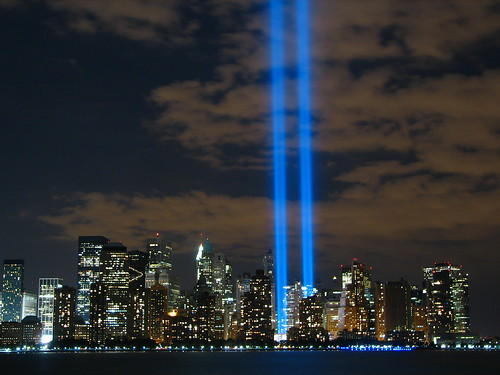
In the book Extremely Loud & Incredibly Close by Jonathan Foer, the protagonist Oskar Schell finds all his answers in his dad. He thought that his dad was the best person in the world. He was smart, logic, and creative. Yes, everyone thinks this about his or her dad for the most part. But for Oskar, he is lost in a sea of questions without him. After losing his dad to the 9/11 terrorist attack, Oskar fights confusion and anger in determination to find closure.
I think that Oskar wants to find closure in completing a game that he and his dad had started before 9/11, and left unfinished. In this game his dad, Thomas, would give Oskar clues and he would have to bring objects to his dad that fit the description. His dad told him when he won. But this game had been going on especially long. Oskar searched day after day. Any questions he had for his dad, Thomas answered with questions. But Oskar never came close. Now, after his dad died, Oskar finds a key that he thinks may be the winner to the game. First though, he must find what the key is for, and who it belongs to.
Oskar travels to boroughs in search of anyone who might have been in acquaintance to his father. Yet, he is met with disappointment. Without his dad there to tell him yes or no, leaves Oskar completely lost and frustrated. He constantly reminds himself when someone doesn't supply him with a satisfactory answer, dad would've known. Oskar loves challenges and thought provoking tasks, but internally he is angry that he was left to figure this out alone. His dad was all Oskar ever wanted to be- but now he is gone. I think that Oskar wants to finish this game as a last sense of connection to his father. To prove himself worthy of one last approval.
I love my dad. He is not a professor, yet I feel like he knows all the answers that would be important to me. I can't imagine losing him, or his dad-jokes, or how he calls my classmates "kitty cats" on school trips. But it's not just him. I couldn't imagine losing anyone dearly close to me. But I feel that if I had, I would want to find a way to make it up to them. I would have to take some path to find closure. Oskar's, unfortunately, happens to be a long difficult odyssey of which he has to conquer on his own.
 |
I think that Oskar wants to find closure in completing a game that he and his dad had started before 9/11, and left unfinished. In this game his dad, Thomas, would give Oskar clues and he would have to bring objects to his dad that fit the description. His dad told him when he won. But this game had been going on especially long. Oskar searched day after day. Any questions he had for his dad, Thomas answered with questions. But Oskar never came close. Now, after his dad died, Oskar finds a key that he thinks may be the winner to the game. First though, he must find what the key is for, and who it belongs to.
Oskar travels to boroughs in search of anyone who might have been in acquaintance to his father. Yet, he is met with disappointment. Without his dad there to tell him yes or no, leaves Oskar completely lost and frustrated. He constantly reminds himself when someone doesn't supply him with a satisfactory answer, dad would've known. Oskar loves challenges and thought provoking tasks, but internally he is angry that he was left to figure this out alone. His dad was all Oskar ever wanted to be- but now he is gone. I think that Oskar wants to finish this game as a last sense of connection to his father. To prove himself worthy of one last approval.
I love my dad. He is not a professor, yet I feel like he knows all the answers that would be important to me. I can't imagine losing him, or his dad-jokes, or how he calls my classmates "kitty cats" on school trips. But it's not just him. I couldn't imagine losing anyone dearly close to me. But I feel that if I had, I would want to find a way to make it up to them. I would have to take some path to find closure. Oskar's, unfortunately, happens to be a long difficult odyssey of which he has to conquer on his own.
Tuesday, October 16, 2012
Revenge Or Relief?
13 Reasons Why By Jay Asher
I am nearing the end of the book 13 Reasons Why by Jay Asher. It is about the protagonist, Clay, listening to tapes recorded by someone who commits suicide. Hannah, the author of these tapes, creates them to tell 13 people why she decided to commit suicide, and what they had to do with it. On each tape, she records a moment of realization, and each one involves one of the 13 people on her list. In these tapes she tells her story, the one that no one has bothered to listen to. In each story, she tells of how that person hurt her, how that person affected her. It seems a little harsh, no? Leaving little reminders that you caused someone to take their life. A little like revenge. It seems as though Hannah did this out of anger, as if she wanted the people on her list to be forever haunted and with guilt. That may be why she started the tapes, but I think that it went deeper than that.
All of Hannah's stories so far, are truly terrible. From any other character's point of view it may have not been, but from Hannah's, I was able to feel upset for her that things went downhill ever since she moved. I can grasp the concept of why she would want to make the people feel guilty. I understand why she would want the 13 people on her list, to realize the affects of their actions. I understand it completely. I remember a couple of years ago, I was extremely upset. I can't remember why exactly, but I remember that it felt like my whole world was crashing down on me. Dramatic. I know. But I felt like I hated everyone, and I couldn't deal with anything anymore. I felt cramped in my small room, and I felt lonely. I wrote down all the things I was thinking into an empty notebook, and left it on the dining room table. I wanted my family to realize how miserable I was. I wanted them to wander upon it, and find a tear-stained scribbled mess of anger and sadness. I wanted them to feel bad. But just as my mom was about to pick it up, I hurriedly snatched the notebook, suddenly changing my mind. I wouldn't meet her stare. I realized it wasn't fair to drag others into my problems, and that it was selfish of me to want them to suffer as much as I was. So I tore up the paper and threw them away.
So, yeah. The tapes that Hannah made could be looked at as unfair, and cruel. It could be argued that blaming these people and then making a permanent reminder is unjust. But I don't view Hannah as the kind of person that was filled with hate for herself and everyone around her. I think she was just tired of hearing rumors about her. She was tired of being looked over as unimportant, as if everyone already knew everything about her. But no one really did. I think that she told her story for the 13 people, in the way it actually was. In this way, the tapes acted as relief to Hannah, because she left the world knowing that her former reputation was cleared.
When I first started reading this book, I thought, this girl is really cruel. But as her story unfolded, I began to understand. The 13 people she blamed for her suicide, they all contributed to her source of unhappiness. Mostly by creating rumors, or breaking her trust. Hannah's trust was battered and bruised from her experiences, and she just wanted to give up. But the tapes, after a while, came off as sad to me. Listening, or reading one after another, I started to accept that she just wanted clarification for everyone. And I felt pain for her, that she needed to do that. Its not fair, that all of her problems escalated so far. Overall, I don't think that Hannah found pleasure in the tapes she made. I think she had a purpose in making them. Do you think she wanted to relive all those moments, that led to her wanting to take her life? Because I don't think so. She wanted people to understand her. Not pity, but simply understand her situation. By recording the tapes, she accomplished just that.
But what do you think was her reasoning? Revenge or relief?
Tuesday, October 9, 2012
Life on Loop: Breaking Away
I am only at the beginning of Possessed, by Kate Cann, but I noticed a clear goal of the main character Rayne. She lives in London, but desperately wants to get away. Escape, as she calls it. Rayne is tired of the loud noises, the tight spaces and responsibilities. She is annoyed with everyone for being to possessive, so clingy. She wants to escape her super-cool boyfriend, her obsessive mother, and having to share her bed with her baby brother when he gets scared. She knows she should be grateful, because she truly does have a good life. But in her eyes, it is the same routine everyday, and she is fed up.
When I read the first two chapters of the book, it was kind of annoying that all Rayne talked about was her desire to leave. In my opinion, she sounds really selfish and stuck up. If you don't read deeply into her reason as to why she want to leave, she just sounds like she complains about everything. Her two year old brother likes to lay next to her on the bed for comfort, but even that annoys her. "I can't bear it, she thought desperately. I hate having him here in my room, in my bed..." When I read that, I was kind of shocked. She only thinks about herself, always complaining to others how her life is so terrible. How she cannot go on living how she does. I don't think she takes into consideration other people's opinion. Why is it she has to leave what she has lived all her life behind, to truly fulfill her wants? Rayne shouldn't have to run away from the people she is unsatisfied with. All she has to do is confront her issues. Doesn't it seem as simple as that?
But truthfully, I think that we've all had those days, when you get frustrated with your life. As a student, I get tired of my long schedules and daily routines. I wake up early, go to show choir, endure six hours of school work, and then I have after school activities. And then I go home to finish my homework and to study. I only have a couple of free days to relax and hang out with my friends. I have early mornings on the weekends as well, for my aikido martial arts classes. I have been using this schedule/routine for over two years now, since I started middle school. I enjoy all my activities very much, but it is the same every week, and every day. When that happens, your life seems to grow more dull. For me, there have been times when I felt so confined, so restless. I felt so... so longing for something exciting to come along. So upset with everybody for no real reason, and you feel like your suffocating. Almost as if your life is on loop, the events of your day replaying itself as the week drags on. So, I personally can connect with Rayne, and I don't think I'm the only one...
Tuesday, October 2, 2012
Finding Yourself
*SPOILER ALERT
The short story "Am I Blue" by Bruce Coville is about a teenager who hasn't fully discovered himself and needs guidance. Vincent receives a fairy godfather to help him find a path. He has been trying to figure out whether or not he is gay for a while, and is stuck in confusion. At the beginning of the story he is reluctant to admit to himself how he feels, but by the end he comes to a realization, while learning the truth about the world and its cruelty.
Vincent gets bullied and called harsh names like "fruit, fairy, and faggot." He is angry and confused and doesn't understand why this is happening to him. When he first meets his fairy godfather, Vincent says, "'Me being your first case. Does that mean I'm gay?' I didn't mention that I had been trying to figure out the same thing myself for about a year now". This is evidence that he is confused, but when I read it, I pictured him saying it kind of vulnerably. It seems as though he kind of doesn't want it to be true. As if he has already concluded the answer to his question. He is anxious to know so that he can get it over with. I think that it is mainly because he doesn't want to deal with all the bullying. For instance throughout the story while he is talking to Melvin, his fairy godfather, what's on his mind is how much trouble he'll be in for talking to a homosexual. "...walking around with a guy who moved the way Melvin did wasn't going to do anything to improve the situation." "'What's the matter, afraid of guilt by association?' 'No, I'm afraid he'll come over here and beat us up. Only he probably can't beat you up, so he'll have to settle for me.'" So obviously he doesn't want to get injured, but I also think that he is denying the sentimental reasons. I think this is how he convinces himself that he isn't gay.
Towards the middle of the story, Vincent wishes for 'gaydar', when you can tell who is gay because in your mind they show up blue. I inferred that when he got this visual, it was kind of like a wake up call that said, you're not alone. "It must be so lonely," he says, because he understands what Melvin feels. I think this comforts him, because he knows that there are other people who have to discover themselves as well.
By the end of the story, Vincent wished for the world to have this blue vision, and it opened up everybody's eyes. He was surprised by the people he saw, and some people upset him. Butch the bully for example, he was blue. So was the republican congressman talking about the horrors of homosexuality. At the end he concludes that although some may live in hiding, he shouldn't have to deal. He accepted that he was gay and he knows that there are others to back him up.
It took a lot for Vincent to come to this realization, and he learned that people hide things to make their lives better. He went from feeling alone, to feeling confident. To do that you have to make a long journey. He accomplished self discovery. Where as I am not even close.
I've never experienced anything that Vincent has. I had to read this story three times just to analyze the text deeper than just words on paper. But then I realized, that I am a "confused puppy", and so are you, and everyone else in the world. There is always the question, What do you want to be when you grow up? Most people at our age, don't know. For me, it's hard to plan things that are so far ahead. And although I like to be independent, I'm not ashamed to admit that I need guidance.
Sadly, I don't get a fairy godmother/father. My guidance comes in the form of my horoscope kindle fire app. It's not as great, but as much as I'd like to, I'm in no rush to find myself. That will come at its own time. I don't know what I want to do when I grow up, and I don't know what kind of person I want to be. I'm glad that Vincent is happy with himself and now has a path that he is satisfied with. Me, I'm still searching for that road, the one that determines who I am and what it means to me.
Tuesday, September 25, 2012
Drummer Boy of Shiloh
In the short story, "The Drummer Boy of Shiloh," by Ray Bradbury, the author uses unique writing craft that I found interesting. The metaphors an uses of imagery he uses throughout the text connect to each other in someway. He also portrays a message of sticking to reality.
When the General finds the protagonist Joby to boost his confidence, he uses a metaphor to explain the point of his speech. "Well, when you got a bunch of wild horses on a loose rein somewhere, somehow you got to bring order, rein them in." This quote stood out to me because it is still relevant to life today, and will always be. My interpretation of this metaphor is that when something has gone to a person's head, something has to be done to bring them back to reality before it hits them unexpectedly.
"I fear it will be full of boys again, just floating, at sundown tomorrow, not caring where the current takes them." This line creates really deep imagery that relates to the earlier qoute. The line where the boys "float carelessly", that's what will happen when the thought of being a hero distracts you. You don't know what you're in for, because you think that even though you are in a war, you aren't in harm's way. In this case, the soldiers die, become injured, or are forever scarred by the gory images of war. In reality, or present time, you are faced with dissappointment. Truthfully, no one is always lucky. Things can't always go the way you plan or wish for it to carry out. You have to prepare for something if you really want it, just like how you can't go into battle unarmed, and expect to win.
In my opinion, I feel that everyone has gone through this in some way. Being unprepared, I mean. For instance, I didn't score high enought to qualify for an admission to Hunter middle/high school. I didn't study for it, unlike many others, and I wasn't prepared. I didn't win the battle against the exam. Now, I really want to score well on the SHSAT exam, so I am taking a Kaplan course. By doing this I am readying myself for the challenges that lay ahead. And I feel secure. Being aware of difficulties is part of being prepared. You have to be ready for what ever reality throws at you, which is the message of the story. But I feel that the message also gives off a bad lesson as well. It makes it seem like you shouldn't have dreams or hopes. It's like saying to yourself, "I won't try, because I know that I will fail." or like giving up before you start because you tell yourself there is no way you can accomplish it. But then comes the idea of preparation. When you have a plan, it is more likely for you to suceed. I feel that is something that a lot of people live by. People work hard to become that organized, to have a strategy or layout to what you want to achieve. So if you don't change the facts of the real world, then you have more control in how an event will result, because you won't be distracted by goals set too high or too low.
Tuesday, September 18, 2012
I know Why the Cage Bird Sings
In the book I know Why the Cage Bird Sings, by Maya Angelou, the protagonist Marguerite constantly feels rejected. The interior conflict was always there, since the beginning and just continues to grow as she becomes older. When she and her brother Bailey were toddlers, they were sent to live with their grandmother in Stamps, Arkansas. Marguerite, Maya for short, had grown up thinking that they had done something wrong, which is why they were there and not with their parents. She grew up blaming herself for every flaw, every mistake. When their parents finally take them to St. Louis to visit, Maya feels she is in a foreign place. She's attacked by her mother's boyfriend and even then she feels responsible. She becomes confused, alone, and stops talking, and her mother sends her and her brother back to Stamps. There Maya meets someone named Mrs. Flowers. Even though it is still only the beginning of the book, I can already notice the internal conflict start resolve. Mrs. Flowers had made Maya feel special and I predict that such a small gesture can go a long way.
I always try to live by the rule to at least one good thing for someone every day. Whether it's holding the door for someone, saying hello, or giving them a compliment. I do this because I know that small things can make people happy. For example, I usually drop my brother off at school, and I used to not think very much of it. I was just doing it because I had the time and my parents didn't always have that. Plus, it was fun to race him down the sidewalk and talk about what was going on at school. So one day when I was dropping my brother off, a parent of a student who went to that school came up to me and said that I was really doing a great thing, taking my brother to school. How so many girls would hate having that chore and how they would love to see their kids getting along the way we did. After hearing that, I honestly felt like skipping home. That comment just made me feel so good about myself. And just think, if everyone could experience that feeling once in a while, everyone would be in a better mood.
So, when Mrs. Flowers, the fancy gentlewoman, paid Maya some attention, she felt amazing. Just by reading to her, giving her cookies, and giving her tea, she felt wanted. For the first time, in a long time. The text reads, "I was liked, and what a difference it made. I was respected not as Mrs. Henderson's grandchild or Bailey's sister but for just being Marguerite Johnson." I think that with this feeling she can have a better attitude towards herself, and start to open up to others. I think that even though this was only a small moment in the book, I think it is important. I feel this is where Maya starts to see herself differently. And I think this will lead to a pattern in her future decisions. So for now, I think this conflict of low self-esteem is starting to be resolved. Maybe she'll come across others who treat her respectfully like Mrs. Flowers. But I think she'll soon just become accustomed once again to being put down. After all, there is still much in the book Maya is yet to experience.
Tuesday, September 11, 2012
Summer Reading Book Response
Sources of Light by Margaret Mcmullan
Towards the end of the summer vacation,I chose this quick read called Sources of Light. This book is set in the early 1960's in Jackson, Mississippi where there isn't many rights for African Americans. It is told from the point of view of Sam, who lives with her mother. Her mother becomes involved with a man named Perry and together they fought for equal rights. Sam is caught in the middle when she starts dating the head of the strictly white church member's son. But when Perry teaches her how to use a camera, something just clicks. Her eyes are opened. Behind her lens she is able to capture moments of injustice and analyze them, and expose those who are unaware of what really is going on. Her life in Mississippi becomes dangerous with the church on their tail, but she keeps taking pictures because she knows she has to. Her bravery really opened my own eyes, and made me think about how I would act if I were in her shoes.
Sam and her whole family were putting their lives in danger for standing up for what they believed in. For Sam it was as little as taking pictures when something occurred. Her mother and Perry made their decision to speak about African American rights, and they didn't pressure her to become involved. She made a choice to get herself into the movement. She risked her status in school, in the church, her relationship, and her safety. I believe that it could have been possible that there were others who had the same beliefs as Sam, but chose to keep to themselves. Being of a darker skin tone myself, I'd like to say that if I had pale skin living in Mississippi that I would've been open about my feelings about equality. But when I think deeply into it, I don't think that I would've. With so many dangers and so much violence, I probably would've played it safe and wouldn't have taken the risk.
I won't give away the ending of the book, but back then there were consequences for those who thought differently than the people who surrounded them. And the reality of that time period hit Sam and her family hard. They may have struggled through it, but yet it didn't stop them. I enjoyed this book because it made me realize things about myself and made me look deeper into situations I've never thought much of before. Like a different perspective. I admit that Sam was braver, and stronger than I am, and so I admire her. Her actions were selfless, even though it took her a while to get there. This really was a great and inspiring story.
Subscribe to:
Posts (Atom)